
Granite, chapels and quiet roads
Beyond the great monuments, a smaller Portugal comes into view: a chapel beside weathered rock, a path between fields, a village whose buildings seem to belong to the ground beneath them.
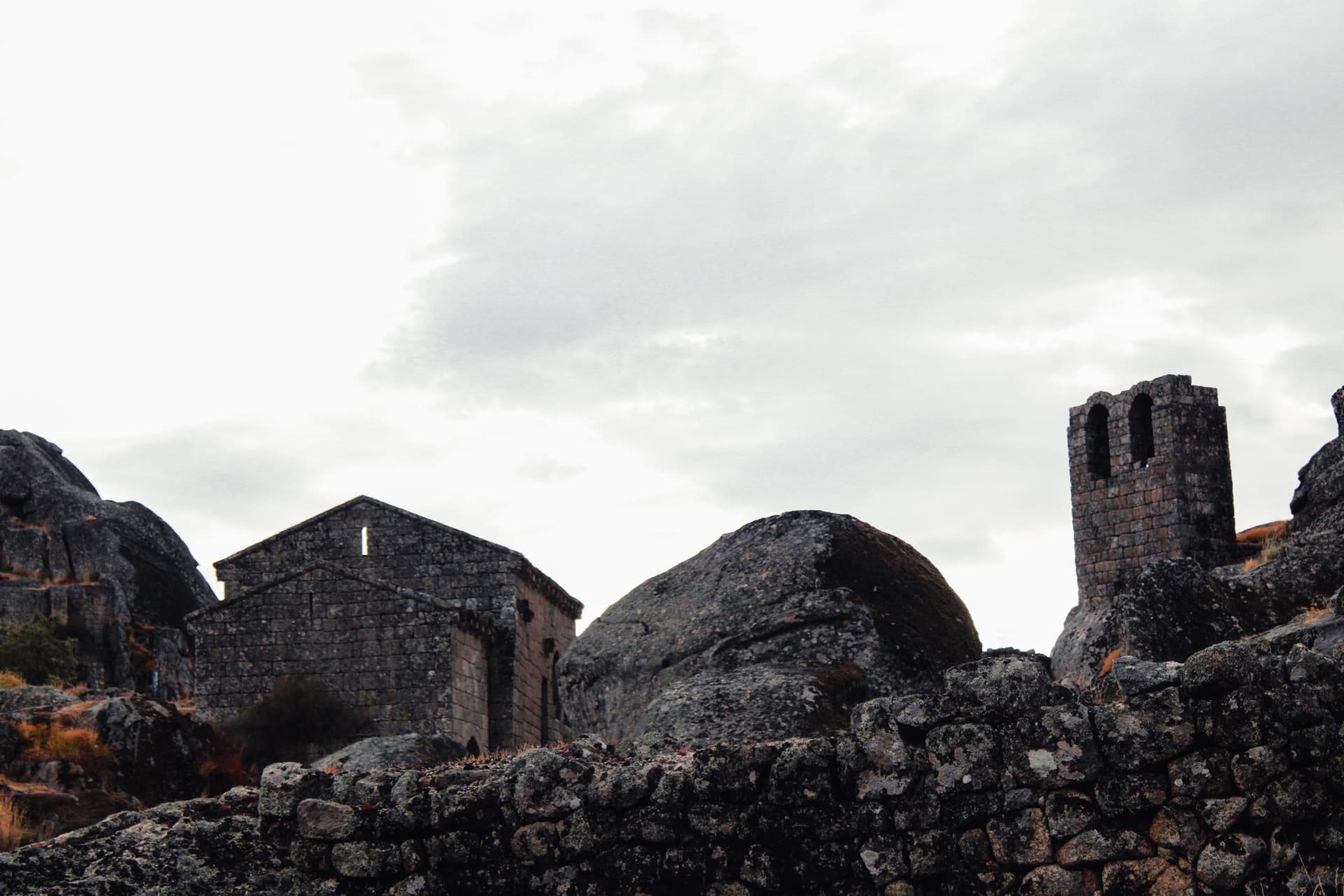
A landscape built in stone
In parts of northern and central Portugal, granite shapes both the terrain and the built environment. Boulders emerge from hillsides, while local stone appears in houses, boundary walls and places of worship. Across the historic villages of the interior, architecture and geology often feel closely connected.
That relationship invites a different kind of attention. Look at how a wall follows a slope, how a doorway is framed or how a path finds its way around a rock. The landscape is not simply the space between destinations. It is part of what makes each place distinct.
Small buildings, careful questions
A modest chapel can hold your attention as fully as a grand monastery. Its position, scale and materials may suggest a close relationship with the surrounding community. But appearance alone cannot tell us its age, dedication or local traditions: those details need local knowledge and reliable records.
Ricardo’s photograph accompanies this reflection on rural landscapes, rather than a claim about the identity of this particular chapel. It is the meeting of stone architecture and granite boulders that draws the eye — a reason to look closer, not an invitation to invent a story about an unnamed place.
Leaving room for local life
Quiet travel is not about finding places with nobody in them. Villages are lived-in communities, and a good visit respects that everyday life. Stay on accessible paths, be considerate around homes and places of worship, and ask before photographing people.
A personal quest can connect a historic village, a landscape walk and time at a local table without treating them as items to collect. Leave room for conversation and for the details that rarely make a guidebook: the texture of a wall, the sound of a bell, the way the road opens onto a view. Sometimes the most memorable part of Portugal is the space you allow yourself to notice it.